About Gary

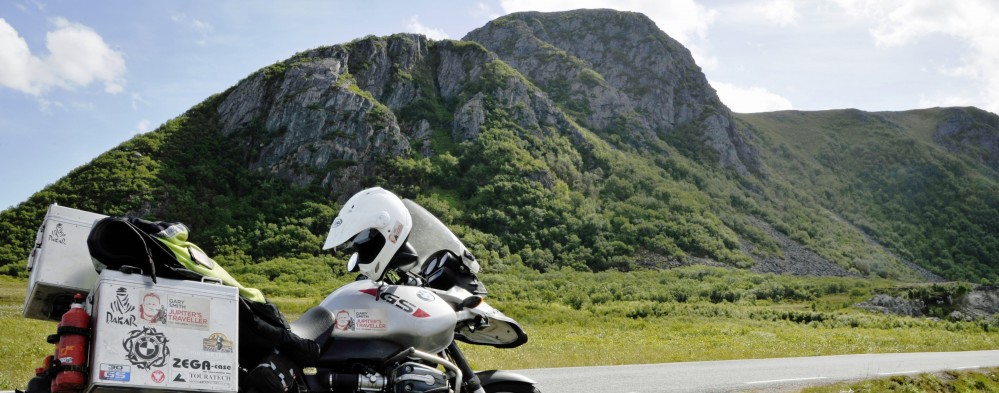
Over the past four decades I have travelled more than 400,000 miles by motorcycle, while my 2002 BMW R1150GS Adventure has covered more than 260,000 miles of its own. In 2011 I was honoured to be selected by the Ted Simon Foundation as one of the inaugural Jupiter's Travellers, an experience that encouraged me to look beyond the motorcycle itself and focus on the people, places and experiences that make travel so rewarding. Tyclyd is where I share the photographs, stories and memories gathered from a lifetime on two wheels.

Tyne Cot

‘Tyne Cot’ or ‘Tyne Cottage’ was the name given by the Northumberland Fusiliers to a barn which stood near the level crossing on the Passchendaele and Broodseinde road. The barn at the centre of five or six German blockhouses, or pill-boxes, was captured by the 3rd Australian Division on 4 October 1917, in the advance on Passchendaele. The Cemetery contains 11,908 graves and 70% of these are unknown. On the wall at the back of the cemetery are the names of 34,927 soldiers who have no known grave and died from August 1917 to the end of the war.

Tyne Cot

Lochnagar Crater

Having seen the Lochnagar crater today the only way to explain the devastating scene is factually. On July 1st 1916 at 7:28 AM, the British Army detonated the Lochnagar mine – two underground charges of a high explosive compound (respectively 24,000lb and 30,000lb) and destroyed trenches occupied by German infantryman. The explosion followed 16 days of heavy artillery fire and immediately preceded a general infantry charge which began the Battle of the Somme – by midnight of the first day there were 57,470 British casualties (19,240 of whom died of their injuries). The battle of the Somme itself continued until 18 November, 1916 by which point it had claimed over 1,200,000 casualties and more than three hundred thousand people were killed during the course of the battle. Lochnagar Crater

The GS is finally home

So my GS is finally home – been a long time coming with a rebuilt gearbox, new clutch plate and third input drive shaft. Its a real shame that this design fault still remains, its a non service item but really would benefit from routine lubrication but with complete gearbox removal and bike strip down required its a difficult and long job to do. At the same time a new clutch hydraulic slave cylinder has been installed, which I know was leaking. The story is that when BMW introduced the hydraulic clutch design they miscalculated and inadvertently moved the clutch disc 8mm further forward towards the engine and off the transmission splines, this results in the splines of the clutch disc falling short of the input drive shaft hence the wear. Apparently Brunos Machine and Repair have a fix so I am on the case now for the new shaft design.


Return of the GS1150